
Heading north on Highway 23 from the 118, my palms begin to sweat a little as I glance over at the steep drop off to my left. I drive higher and higher up the incline, nervously noting the lack of any guardrails. A panorama of mountain chains surrounds me on all sides. The views are breathtaking. I pull over as I reach the highest point of the journey and see the serpentine beauty of Grimes Canyon as it twists down below.
I hop back into the car and begin the descending part of the journey. Past the sand and gravel quarry, which somehow feels like a relic from another era. The sun is shining as the two-lane highway winds through acres of row crops scattered with barns and tractors. I cross the (dry, as usual) Santa Clara River as the road finally straightens out and takes me directly into a scene from an old fruit crate label. Lush groves of citrus on either side of me while the dusty brown peaks of the mountains lie straight ahead, this is Fillmore, CA.
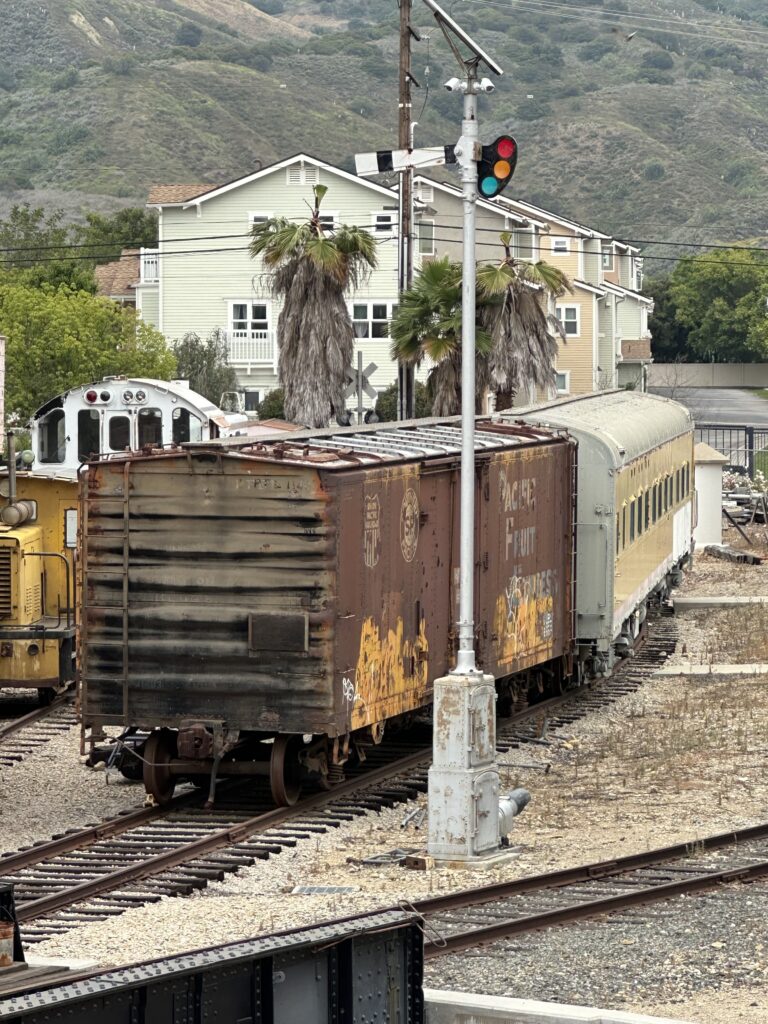
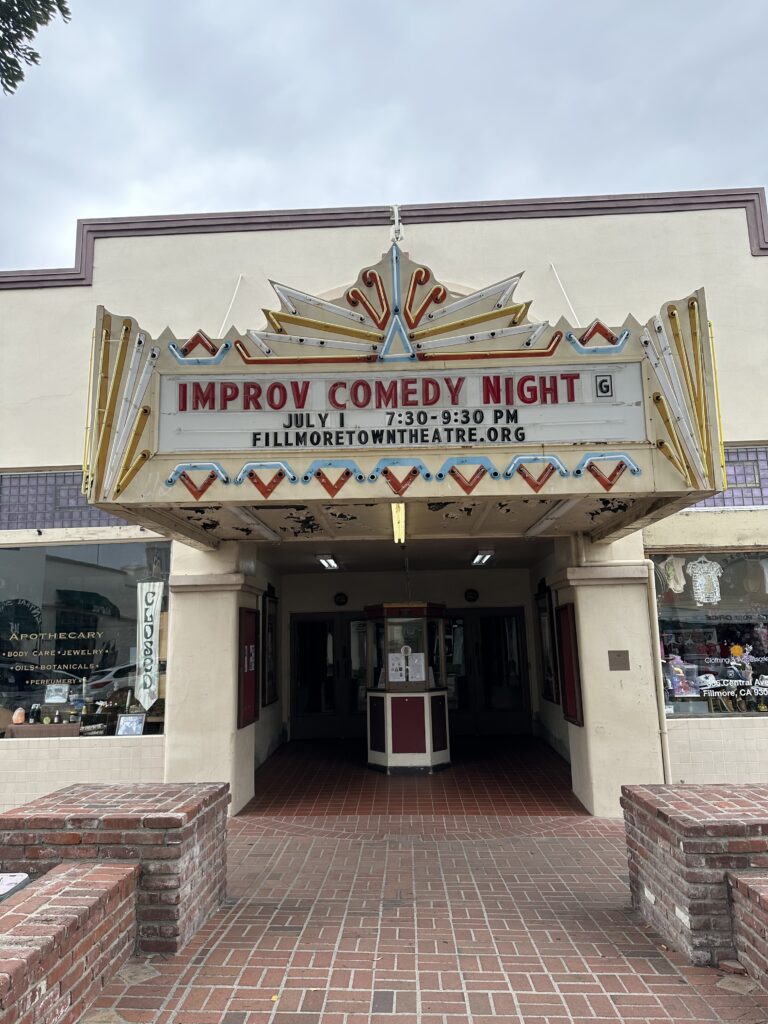
An old railroad town founded by the Southern Pacific in 1887, Fillmore is known mainly for its agriculture and its historic downtown. The city rests between the Santa Susana Mountains to the south and the Topatopa Mountains to the north, providing stunning views in this stretch of historic Ventura County. Acres and acres of oranges, lemons and avocados accent the landscape in neat rows of orange, yellow and green. Quiet backroads run through scenic farmlands and the occasional country home. Unfortunately, the fierce march of progress has bestowed upon Fillmore the dreaded chain store. McDonald’s, Family Dollar and the like lined up on the main drag that runs through the city, Ventura Street. Fortunately, the historic downtown on Central Avenue still remains, complete with hardware store, pharmacy and movie theatre. Downtown is truly the gem of Fillmore.
I found myself alone, sitting down in front of the Towne Theatre, a single screen theatre located in the heart of downtown. It was a beautiful weekday afternoon in October, sun on my face, tempered by a cool autumn breeze. There were speakers attached to the light poles, playing string orchestral music. It was truly dreamlike to be here, not a soul in sight, a soft chorus of strings pumped through the air, while I simply sat and breathed in the calm of this strangely charming place. Peacefully quiet, eerily silent, it was like a movie set, a stand in for any Main St, USA.
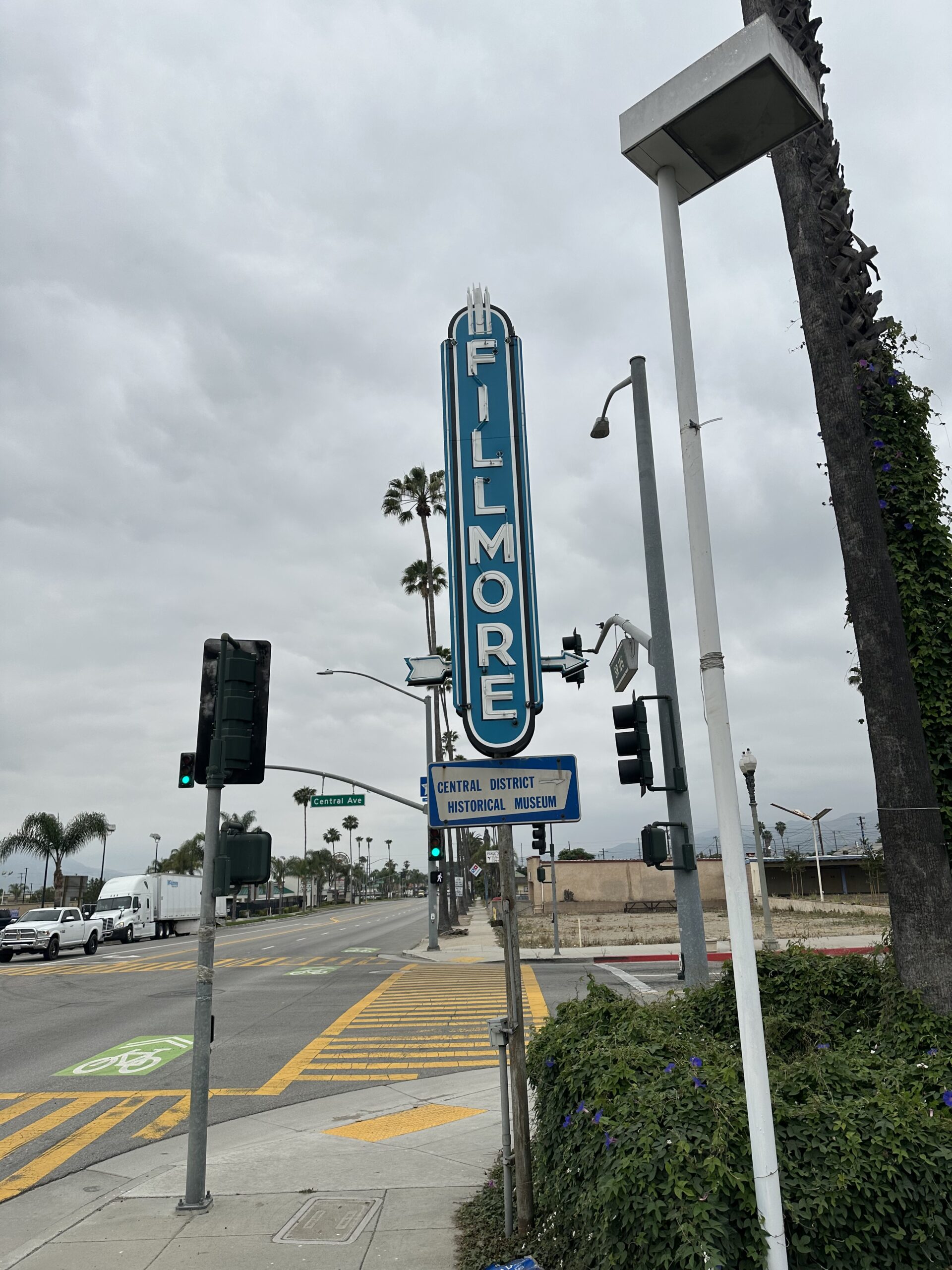
When seeking out the past in the modern day, it is vital to look beyond the McDonald’s and the Family Dollars. It is necessary to search for the remnants of the past as time slowly develops it into oblivion. The original foundations jutting out here and there as reminders of the generations of lives that have paved the way. But they are always there, somewhere, even in the most modern of cities. Fillmore somehow manages to retain a sense of those days gone by. Some artifacts remain such as the 1940’s neon Fillmore sign on Central Ave. The history thrives in the beautifully quaint Bardsdale United Methodist Church, built in 1898 and nestled amongst the fields on the edge of town. The past lives on in the communities that continue to thrive and grow and call Fillmore their home.
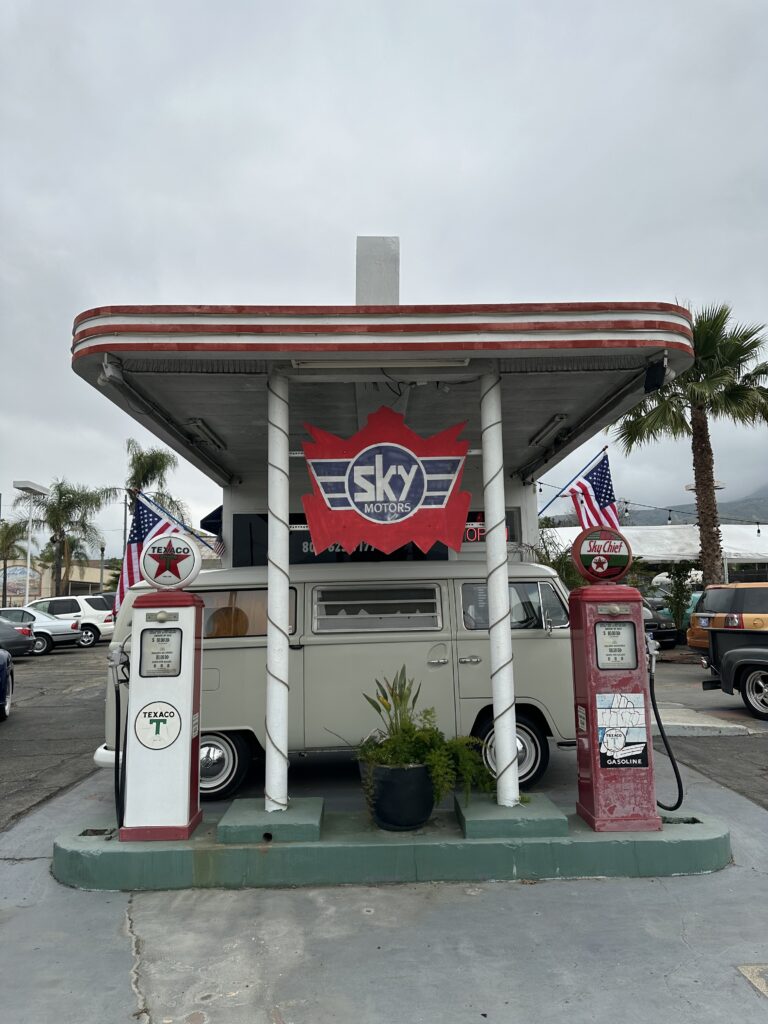
History is alive in Fillmore. I can feel it in the cool autumn breeze as the sun closes out my day here. I can see it as I take my time driving out of town. I can see the gatherings of another time. The harvests and the holidays. The festivals of times gone by, the sharing of stories and meals. Tables set with pitchers of fresh lemonade and ice chests filled with cold bottles of beer. The people gathering to reflect and to complain. Lives lived and loves lost and all that makes life beautiful. It is quite possible that I am putting Fillmore on a sort of romanticized pedestal. It is also quite possible that Fillmore does, in fact, live up to its official city motto: “the last best small town in Southern California”